ABODE School

Academics

Curriculum Overview

At ABODE School, we offer a diverse and enriching curriculum tailored to meet the needs of our students at every stage of their educational journey. Our curriculum is designed to foster intellectual growth, creativity, and a deep understanding of the world.
01
Montessori

Integrated Curriculum
CBSE or Cambridge

02
Preschool

Lower School (Grade 1 - Grade 7)
Grade 8 onwards

Montessori

Montessori is an educational approach that focuses on the unique needs and development of each individual child. Developed by Dr. Maria Montessori in the early 20th century, this method is rooted in the belief that children learn best when they are allowed to explore their interests and follow their natural curiosity.

A fundamental aspect of the Montessori method is the concept of the absorbent mind. From birth to six years, children possess an extraordinary ability to effortlessly absorb and integrate information from their environment. This innate capacity allows them to learn and adapt rapidly. Complementing this is the concept of sensitive periods—specific windows of time within these early years when children are especially receptive to acquiring particular skills. These "prime periods for learning" occur when children are naturally inclined to explore, master new abilities, and absorb knowledge. During these sensitive periods, children engage deeply with activities that align with their developmental needs, enhancing their learning experiences and growth.
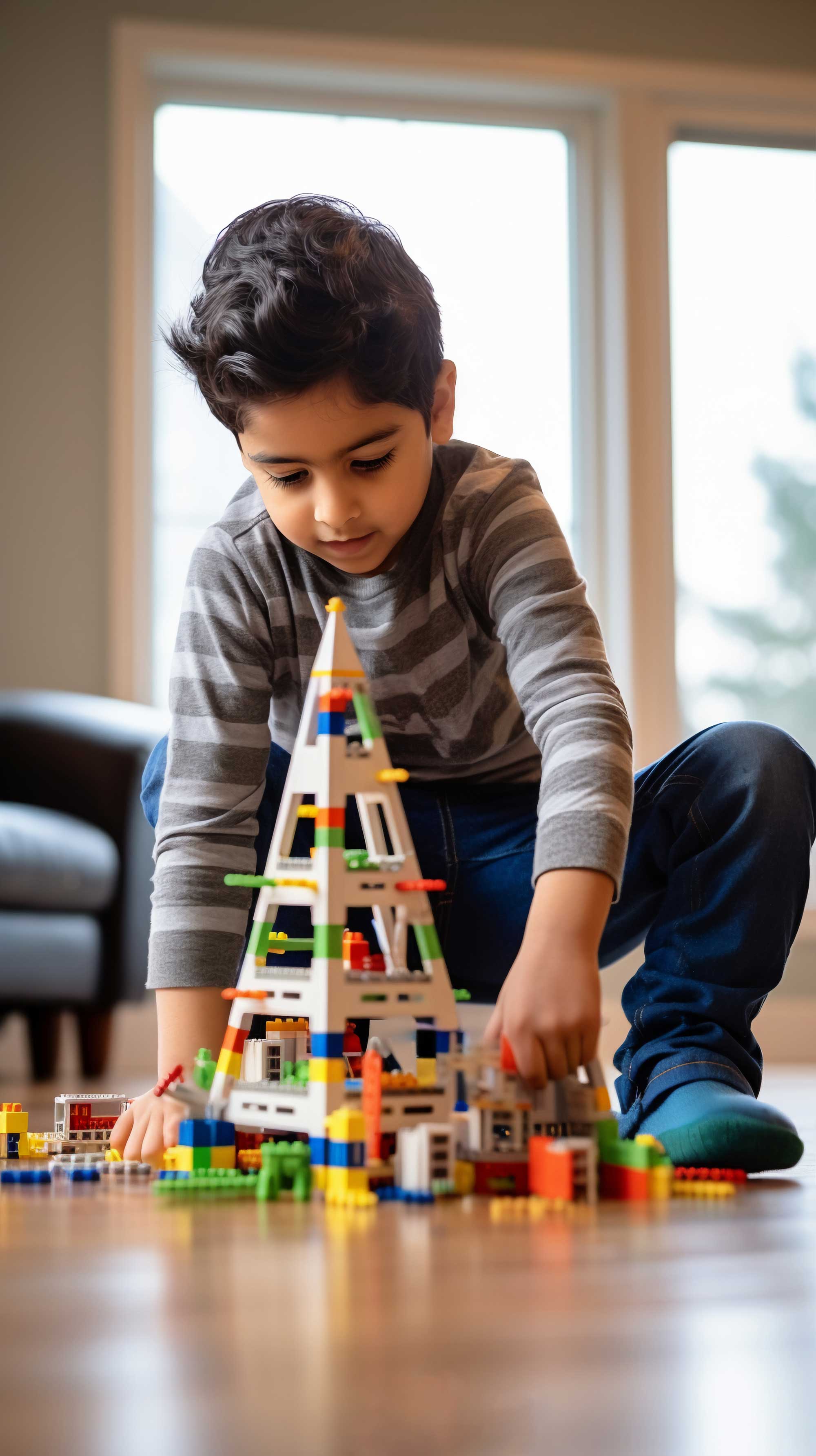
The Montessori method focuses on five key areas of learning:

Practical Life
Sensorial
Language
Mathematics
Culture

Each key area of learning supports and nurtures the child’s cognitive, social, and emotional development. These areas are meticulously designed to align with children’s sensitive periods. Our carefully prepared environment, rich in resources and opportunities for exploration, encourages natural curiosity and facilitates deep, meaningful learning experiences.

Guided by the principles of the absorbent mind and sensitive periods, our curriculum aims to support each child's unique developmental path through a journey of self-discovery, building a strong foundation for lifelong learning.

Preschool

Cambridge & CBSE

Offered in integrated format from Grades 1-7 in Lower school and as a separate curriculum from Grade 8-12 in High school.
CBSE

The Central Board of Secondary Education (CBSE) curriculum is grounded in a well-structured, comprehensive educational framework. It is designed to provide a robust academic foundation with a strong emphasis on science, mathematics, and social studies, complemented by a balanced focus on language and arts. CBSE promotes analytical thinking, problem-solving skills, and prepares students for national and international competitive exams.

Cambridge

The Cambridge curriculum, offers a global perspective on education, focusing on critical thinking, inquiry-based learning, and the application of knowledge. Known for its rigorous academic standards, the Cambridge program encourages students to explore subjects in depth and develop independent research skills. It is designed to be flexible, catering to the individual needs and strengths of students, and provides them with qualifications recognized by universities worldwide. The curriculum not only prepares students for academic success but also equips them with the skills needed to thrive in a globalized world.

Dr. Maria Montessori
The child is endowed with a power which we must respect and which is not a direct result of our teaching, but a power which we have to develop
Education is a natural process carried out by the child and is not acquired by listening to words but by experiences in the environment.
The most important period of life is not the age of university studies, but the first one, the period from birth to the age of six
The child is both a hope and a promise for mankind
Within the child lies the fate of the future

Preschool

Montessori Pedagogy

We are committed to deliver unique digital media solutions from web development to eCommerce solutions for our happy clients by using our knowledge and expertise.

Dr. Maria Montessori founded the Montessori method in the early 1900s. Her scientific approach to education has shaped around the individual needs of the child. The goal was to develop the child and their whole personality.

Built on three primary principles – observation, individual freedom, and preparation of the environment – the Montessori classroom is designed as an environment where children can freely choose from many developmentally appropriate activities.

Montessori education offers a distinctive approach to early childhood learning, designed to recognize and nurture your child’s exceptional cognitive abilities. This method is grounded in the belief that young children possess a natural, sponge-like ability to absorb information from their surroundings, a concept Dr. Montessori termed “the absorbent mind.” The Montessori approach creates an environment where children can learn naturally and spontaneously, free from direct instruction or external pressure.

The Montessori environments are thoughtfully crafted with engaging materials tailored for children aged 18 months to six years. These materials support children in exploring and learning at their own pace. Montessori teachers are trained to develop keen observation skills, allowing them to understand each child as an individual and provide activities that match their current interests and developmental needs.

We recognize that children progress at different rates. While some may focus on a task for an extended period, others might advance more quickly. We aim to foster each child’s enthusiasm and joy for learning, rather than sticking to rigid milestones. In our mixed-age classrooms, older children naturally assume leadership roles and younger ones benefit from peer modeling. This setup creates a supportive, collaborative learning environment where children learn from one another.

Young children begin with "Practical Life" activities, such as cleaning, pouring, and plant care, which help them develop essential life skills. As they grow, they engage with interactive materials to explore sounds, symbols, numbers, and foundational concepts. This hands-on approach aids their understanding of subjects like geography, botany, and zoology, and introduces them to music and art. By their final year, children experience significant growth in reading, writing, and math skills. This stage is often marked by rapid development and newfound confidence.

Montessori education not only imparts specific skills but also fosters a lifelong love of learning. Children in Montessori programs develop deep-rooted confidence and curiosity about the world, having learned in an environment that encourages natural exploration and self-directed discovery.

Montessori in
ABODE

Montessori Philosophy dictates that each child learns at their own pace and is allowed the time to concentrate and master concepts before moving on to a new one. Studying in a Montessori environment grooms a child to be self-motivated and curious with a deep love of learning.

The Five Key Areas of Montessori Learning

Montessori education offers a well-rounded approach to early childhood development through five key areas of learning. Each area is carefully designed to nurture different aspects of a child's growth and curiosity.

Practical Life (EPL) Practical Life activities form the core of the Montessori curriculum, focusing on everyday tasks such as pouring, lacing, and flower arranging. These activities are integral to developing fine motor skills, hand-eye coordination, and concentration. Children engage in these tasks with the goal of cultivating independence and confidence. The emphasis is on the process of learning rather than the end product, allowing children to experience the satisfaction of completing meaningful, real-life tasks.

Grace and Courtesy Grace and Courtesy, a vital component of Practical Life, emphasizes respectful behavior and social skills. Children learn how to interact politely, care for their environment, and practice good manners. This area helps build self-respect and positive social interactions, creating a harmonious classroom atmosphere where children understand the importance of treating others with kindness and consideration.

The Sensorial area is designed to refine children’s sensory perceptions through materials that explore qualities such as color, texture, size, and shape. Tools like Knobbed Cylinders, Color Tables, and the Pink Tower provide hands-on experiences that enhance observational skills and sensory understanding. This area supports cognitive and perceptual development by helping children make finer distinctions among various stimuli and understand their sensory experiences in a structured way.

Montessori language education focuses on developing strong verbal and non-verbal communication skills. Children use materials such as Sandpaper Letters and the Moveable Alphabet to explore the basics of sounds, letters, and early writing. This approach fosters a love for language and effective communication, guiding children from recognizing letters to developing reading and writing skills. The language curriculum is designed to engage children in meaningful ways that support their literacy development and encourage a lifelong interest in language.

The Logic curriculum introduces mathematical concepts through concrete materials. Children use tools like Bead Chains, the Ten Board, and Gold Beads to learn about numerals, counting, and basic arithmetic operations. These hands-on experiences make abstract mathematical ideas more accessible and understandable. Through these materials, children develop logical reasoning skills and a solid foundation in mathematical principles. Eventually the child will begin to work through an abstract process, without using concrete materials as before. At this point, the child can actually visualize consciously that the process of addition is “putting things together” and that subtraction is “taking things away.”

In Montessori education, the Culture area encompasses both geographical and scientific exploration. Children use colorful maps and puzzles to learn about continents, countries, and cultural diversity, fostering an appreciation for global interconnectedness and respect for different cultures. Additionally, children engage in activities related to science and nature, such as observing plants and animals, conducting simple experiments, and learning about natural phenomena. This exploration promotes scientific thinking and a sense of wonder about the world around them, helping children develop a holistic understanding of their environment.

Each of these areas contributes to a comprehensive Montessori education, supporting the development of essential skills and nurturing a lifelong love of learning.

Toddlers Program
(18 months to 2.5 years)

During the toddler age group of 18 months to 3 years, a child is in the Absorbent Phase. The young toddler’s Absorbent Mind has a sponge-like capacity to absorb from the environment around.

ABODE’s Toddler’s program is designed to provide a child with a prepared environment enriched with numerous opportunities for the toddler to evolve into a confident and independent child.

Key Features

In our Montessori Toddler Program, language enrichment is a key focus. We understand that during the toddler years, children are in the Absorbent Phase, where their minds are exceptionally receptive to language acquisition. Our program is designed to provide a rich linguistic environment that supports and enhances their natural ability to absorb and develop language skills.

  • Songs: Singing is an integral part of our daily routine. Through songs, children are introduced to new vocabulary, rhythms, and sounds.
  • Storytelling: Storytelling sessions captivate the children's imagination and develop their listening and comprehension skills, as well as introduce our toddlers to a diverse vocabulary.
  • Word Games: Word games focus on enhancing their phonemic awareness and vocabulary.
  • Interactive Sessions: Our interactive sessions are structured to encourage verbal expression, listening skills, and social interaction.

In the Montessori Toddler Program, kinesthetic development is a fundamental aspect of our approach, recognizing the importance of physical activity in a child's overall growth. Our program is designed to support and enhance toddlers' physical skills through a variety of carefully curated activities and environments.

  • Eye-Hand Coordination: In our Montessori setting, we use specialized materials and activities that are specifically designed to enhance this skill.
  • Gross Motor Movement: Gross motor development is supported through a safe and open environment that encourages toddlers to engage in various forms of movement.
  • Play Area: The play area is designed to be safe and accessible, allowing toddlers to engage in activities that support their physical and cognitive development while having fun

In the Montessori Toddler Program, Practical Life Activities are a cornerstone of our approach, designed to foster essential life skills and support holistic development. These activities help toddlers gain independence, develop responsibility, and build self-esteem through meaningful, everyday tasks.

  • Self-Care:: Self-care activities help toddlers build confidence in their abilities and learn to manage their personal care routines.
  • Environmental Care:: Toddlers participate in tasks that instill a sense of responsibility and respect for their surroundings, while also fostering a connection to their environment.
  • Autonomy:: We provide opportunities for children to make choices in work and play as part of their daily routine to develop a sense of autonomy.
  • Positive Self-Worth:: The activities designed are age-appropriate to build confidence and self-esteem.
  • Prepared Environments: Classrooms are carefully designed to meet the needs of toddlers, encouraging exploration and learning.
  • In-Class Dining: Areas are designated for meals to help children learn dining etiquette and social skills.
  • Sleeping Corner: Nap area is available within the environment to ensure restful breaks.
  • Child-Sized Restrooms: Facilities designed for young children to use independently.

Preschool Program
(2.5 to 6 years)

In the Montessori framework, children aged 0 to 6 years are in the "Sensorial Plane," a crucial period characterized by an intense drive to explore, learn, and discover. This stage represents a time of explosive learning, where children are naturally inclined to absorb knowledge through their senses and interactions with their environment.

At ABODE, our Preschool Program is designed to harness this innate curiosity and provide an enriching environment that supports sensory exploration and learning.

Key Features

We focus on five key areas of Montessori education, ensuring that each child’s developmental needs and interests are met.

Practical Life Activities are foundational to our Preschool Program, offering children opportunities to develop essential life skills and autonomy. These activities are categorized into three main areas:

  • Care of Self: Activities in this area are aimed at helping children develop independence and self-confidence. Through tasks children learn to perform daily routines with increasing autonomy.
  • Care of Indoors: This aspect focuses on fostering a sense of responsibility and respect for their immediate environment.
  • Care of Outdoors: In this area, children engage in tasks that teach them to care for their broader environment instilling a connection to nature and a sense of environmental responsibility.

The Sensorial area caters to enhancing children’s sensory perception and cognitive abilities.

  • Sensory Activities: These activities encourage children to explore and interact with different senses, helping them develop a keen awareness of their environment.
  • Characteristics of Dimensional Materials: Specially designed materials allow children to differentiate between various qualities such as size, shape, texture, and color.

Language development is a key focus in our Preschool program, with a carefully structured approach to fostering early literacy and communication skills. Our language enrichment activities are designed to support and enhance the following aspects of language acquisition:

  • Writing Skills
  • Reading and Comprehension
  • Grammar
  • Rhyming Words

The unique Book Bag Program in Preschool additionally helps in laying a strong foundation for reading skills, comprehension skills, and vocabulary enrichment.

The Logic area introduces pre-math concepts that lay the groundwork for future mathematical understanding using concrete materials.. Key components include:

  • Pre-Math Concepts
  • Arithmetic
  • Place Value
  • Four Operations

The Culture area encompasses a broad range of subjects designed to broaden children’s understanding of the world. We explore:

  • Art: Creative activities that encourage self-expression and appreciation of different art forms.
  • History: Simple concepts of past and present, helping children understand the passage of time.
  • Botany: Introduction to plant life, including plant parts and growth processes.
  • Zoology: Study of animals, their habitats, and characteristics.
  • Geography: Basic geographical concepts, including maps.
  • Culture: Exploration of various cultures.

Enrichment Program in Preschool

Our Enrichment Program in Preschool is designed to give experience to students in a variety of activities, helping them identify their interests and support their personal growth.

Key Features

In our music program, children explore rhythm and melody through various activities that encourage self-expression and foster an appreciation for music. They engage in singing different songs and are introduced to basic Carnatic vocal exercises, including swaras.

Dance classes introduce children to creative movement and rhythm. students learn coordination, balance, and spatial awareness. Dance promotes physical fitness and self-expression.

Our gymnastics program provides children with the opportunity to develop strength, flexibility, and coordination. Gymnastics exercises enhance gross motor skills and build confidence as children learn to perform various movements and routines.

In the Montessori context, art activities are integrated with culture topic exploration. Children use art as a medium to express their understanding of different cultures and themes. Through activities such as painting, sculpting, and drawing, students connect with cultural topics, enhancing their creativity and emotional expression.

Sports classes offer a general introduction to physical activities, focusing on overall fitness and development. Children learn the basics of various sports, including teamwork, and physical coordination, promoting a healthy and active lifestyle.

Lower School

Integrated Curriculum: A Holistic Approach

Our integrated curriculum is designed to offer a holistic education, guiding students smoothly from primary through high school. This curriculum emphasizes three key stages of learning: Presentation, Exploration, and Mastery. Each stage plays a critical role in fostering intellectual curiosity and deep understanding.

In the Presentation stage, students are introduced to a 'big idea' inspired by their natural curiosity. This stage involves presenting a concept or topic in a way that connects with the students' interests and prior knowledge. The aim is to engage students and stimulate their interest, laying the groundwork for deeper exploration. Through engaging and thought-provoking presentations, students begin to form connections and ask questions that drive their learning.

During the Exploration stage, students actively seek answers through a variety of resources. This phase encourages independent and collaborative research, allowing students to investigate the 'big idea' from multiple perspectives. They use diverse materials such as books, digital resources, experiments, and discussions to gather information and deepen their understanding. Exploration fosters critical thinking and problem-solving skills as students analyze and synthesize information.

In the Mastery stage, students demonstrate their understanding through various methods. This can include presentations, projects, essays, or creative expressions. The goal is to showcase their grasp of the material and their ability to apply their knowledge in different contexts. Mastery not only reflects the students' comprehension but also their ability to articulate and communicate their learning effectively.

Subjects offered

01
Math
02
English
03
Science
04
Social
05
Second language

Hindi/Telugu

06
Third language

Hindi,Telugu and French ( Grade 4 & 5),
French(6 & 7)

07
Compulsory Telugu

(Grade 1-7)

08
Python Program

( Grade 4-7)

Key Features of Our Curriculum

Classrooms are equipped with appropriate resources to create an engaging learning environment and to facilitate a deeper understanding of mathematical and scientific concepts through interactive learning.

We promote small group presentations and collaborative projects to promote teamwork, critical thinking, and active participation.

Classrooms are designed to engage students through dynamic activities and student-led exploration, moving away from traditional teacher-directed instruction

A diverse collection of resources is available to support ongoing learning, encourage independent research, and spark intellectual curiosity.

Programs and activities that support the development of social-emotional skills, resilience, and self-regulation.

High School

In Grade 8, students at our school have the opportunity to make a choice between the Cambridge and CBSE curricula. This choice allows them to pursue their preferred educational path from Grade 8 to Grade 12. Our school provides a supportive and enriching environment, enabling students to pursue their chosen curriculum and prepare for future academic pursuits.

Starting in Grade 8, students have the opportunity to select between the Cambridge or CBSE curriculum. This choice ensures that they receive a comprehensive education tailored to their individual needs and aspirations.

Both curricula offer a strong emphasis on core subjects, including Mathematics, Science, and English. To further enrich their educational experience, we provide additional subjects and electives that support diverse interests and career paths.

In addition to academic subjects, our curriculum focuses on equipping students with essential skills for their future endeavors

  • Critical Thinking and Problem Solving: Encouraging analytical skills and innovative thinking.
  • Research and Inquiry: Providing opportunities for independent research and project work.
  • Leadership and Collaboration: Fostering teamwork and leadership abilities through group projects and extracurricular activities.

To complement their academic journey, students have access to a wide range of clubs and sports activities

  • Sports: Students have access to a diverse range of sports activities, including cricket, basketball, football, and athletics. These sports programs promote physical fitness, teamwork, and personal growth.
  • Clubs: A diverse selection of clubs, including debate, drama, robotics, and environmental initiatives, allows students to explore interests and develop new skills outside the classroom.
Scroll